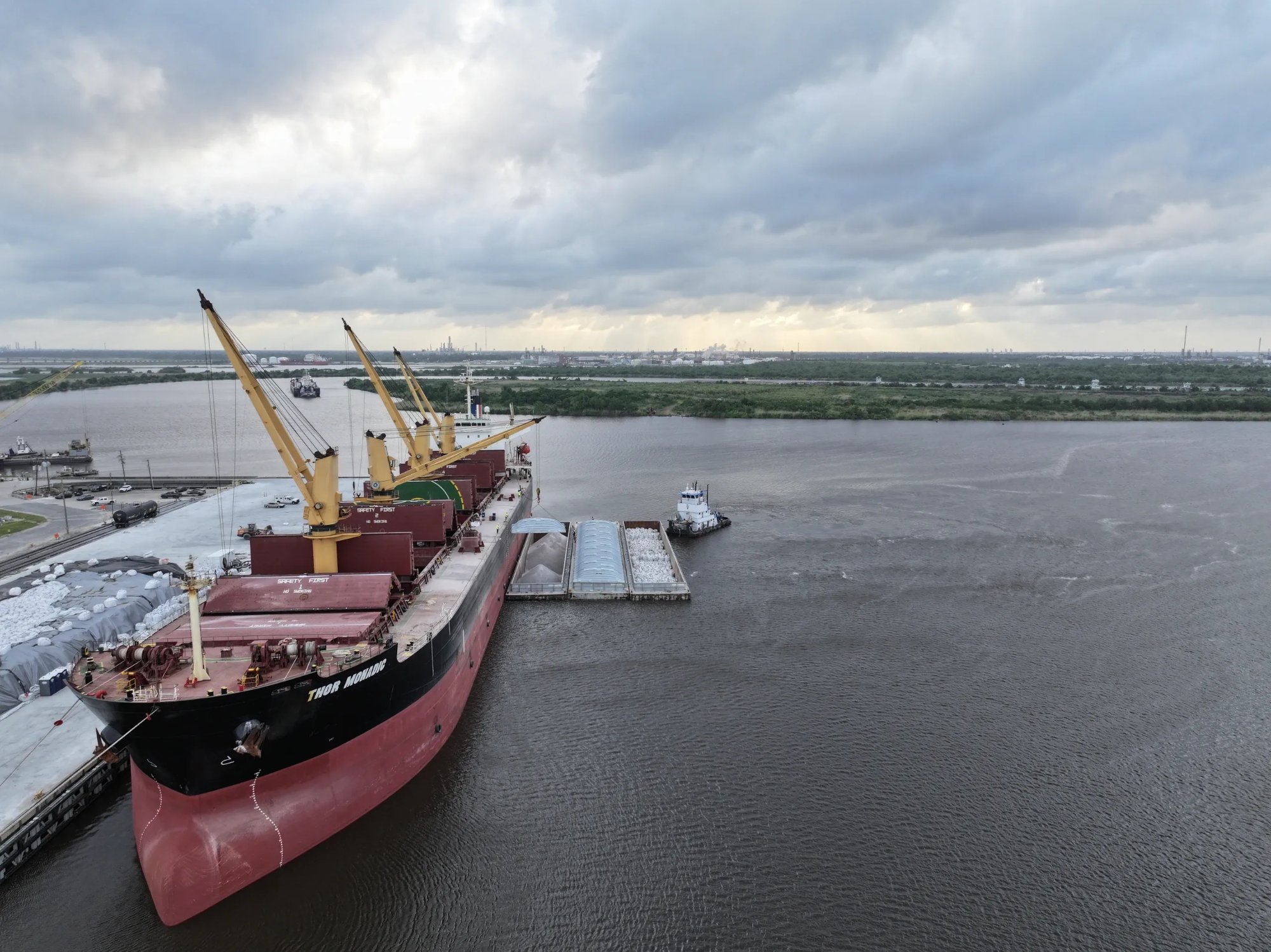
The MV Tsunomine was a special project. When the final numbers came in, the GCS team had set a new record — the most successful supersack cement project in the company's history. And in a business where records are built on the back of disciplined crews, quality equipment, and good collaboration with the vessel's team, this result deserves to be documented properly.
The Numbers
37,538 metric tons of supersack cement. Two consecutive days with over 10,000 metric tons discharged per day. 88% crane uptime across all active cranes throughout the project. Those three numbers tell the story of an operation that fired on all cylinders — from the first crane swing to the final bag cleared.
Moving 10,000 metric tons of supersack cement in a single day is a significant operational achievement. Doing it two days in a row — sustaining that pace, that crane utilization, and that crew coordination across consecutive shifts — is the real record. It means the operation had no major resets, no significant downtime events, and no crew performance gaps that broke momentum.
The Vessel Crew Made It Possible
GCS doesn't shy away from acknowledging when outside factors help make a record possible — and in the case of the MV Tsunomine, the vessel's crew deserves specific recognition. The ship arrived with immaculate ship's gear. Every crane on the Tsunomine was in exceptional condition, properly maintained, and ready to perform from day one.
That matters more than most people outside the industry realize. Crane mechanical issues are one of the most common sources of downtime on vessel discharge operations — a crane that trips offline mid-shift can destroy an hour of productivity in minutes. The Tsunomine's 88% crane uptime isn't just a GCS achievement — it's a direct result of a vessel team that came to work with gear that was ready.
Immaculate ship's gear from the vessel crew was a critical factor in sustaining the record throughput. GCS acknowledges and thanks the crew of the MV Tsunomine for arriving with exceptional equipment readiness.
What 10,000 MT/Day Requires
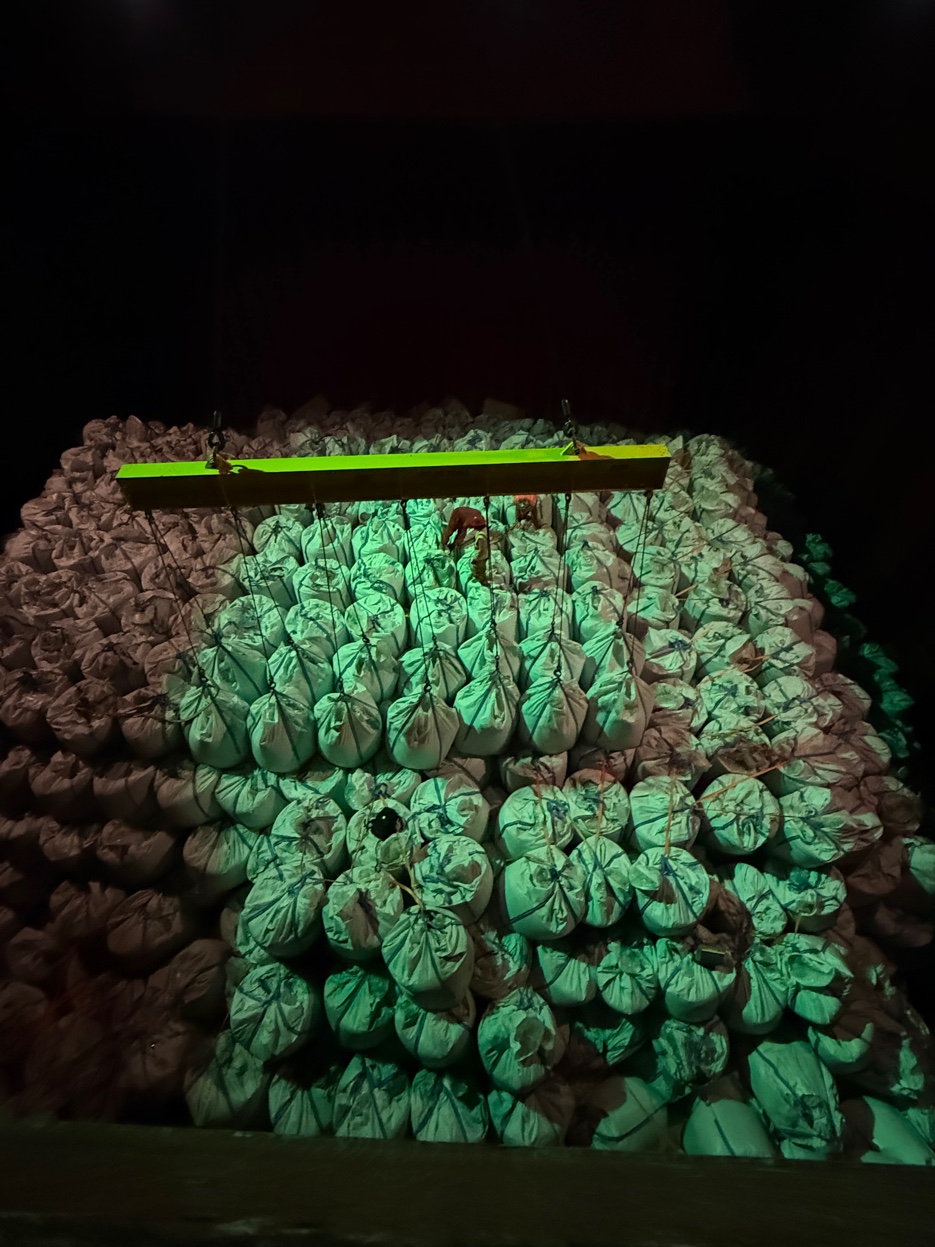
Sustaining 10,000 metric tons per day on supersack cement is a whole-operation effort. It starts with Hold Leads who know their sections and keep cargo accessible and organized for the crane. It requires Equipment Operators who move without hesitation from hook to staging. It means Supervisors managing crane utilization, crew rotation, and production metrics in real time — not reviewing numbers at the end of the shift but adjusting throughout the day.
GCS runs the Knomatic platform on every project — and on the Tsunomine, real-time tonnage tracking per crane and per hold allowed the supervisory team to see exactly where throughput was and respond before performance dropped. That live operational visibility is one of the genuine competitive advantages GCS brings to high-stakes projects.
Ready for Your Next Project?
GCS has the crews, the equipment, and the operational technology to deliver results on complex, high-volume vessel discharge operations.