A stevedoring operation is only as good as the crew executing it. GCS Industrial Group's labor management capability starts with the right people — trained, experienced, safety-focused stevedoring crews — and e...
A stevedoring operation is only as good as the crew executing it. GCS Industrial Group's labor management capability starts with the right people — trained, experienced, safety-focused stevedoring crews — and extends through smart crew scheduling, continuous performance monitoring, and the real-time crew utilization data that allows GCS leaders to make optimal deployment decisions throughout every operation.
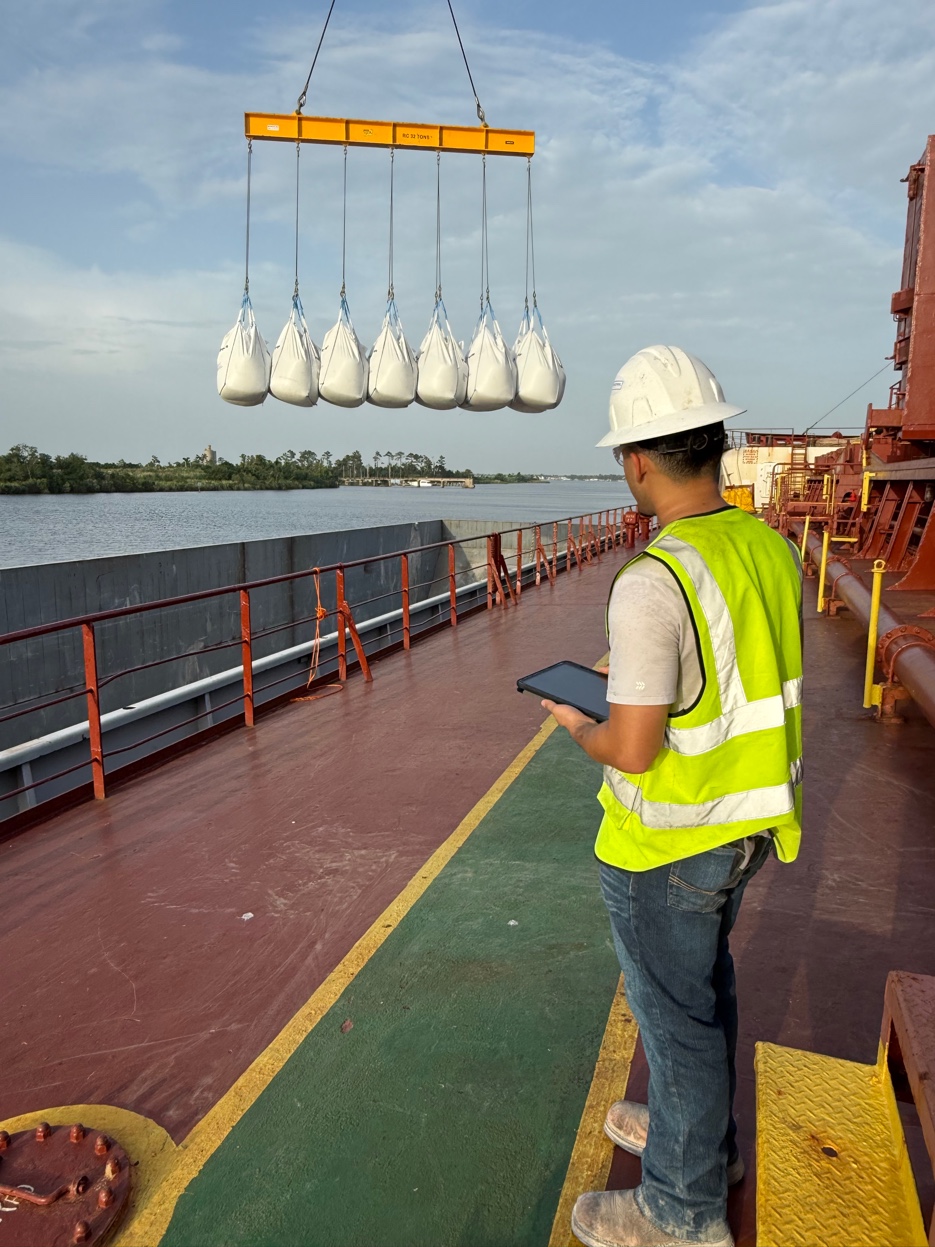
Stevedoring labor is not a commodity. The worker who understands how to rig a 90-foot concrete pile, who knows how to work a spreader bar across a full hold of supersacks, who has the discipline to maintain throughput pace across a 10-hour night shift in August — that person is genuinely difficult to replace and materially affects the economics of the operation they're part of.
GCS builds its labor force deliberately, with training programs that cover commodity-specific handling techniques, safety protocols for every cargo type GCS handles, and the operational discipline that comes from working within a system — Knomatic — that tracks and rewards production performance. GCS crews know what the target pace is, they know leadership can see it in real time, and they know that performance matters.
Crew scheduling at GCS is driven by job requirements, not just availability. The number of crews, their composition (hold leads, winch operators, deck crew, dock crew), and their shift assignments are planned against the vessel plan and adjusted in real time as the operation develops. GCS doesn't overstaff for labor cost padding or understaff for margin — the goal is the right crew for the job, efficiently deployed.

GCS analyzes vessel plan, cargo type, and port conditions to determine optimal crew count, composition, and shift schedule before the first line is thrown.
All GCS stevedoring labor is trained, safety-certified, and experienced with the specific commodity being handled — no general labor fill for specialized cargo.
Knomatic tracks crew utilization metrics throughout the operation — identifying over- or under-deployed positions so supervisors can rebalance continuously.
Experienced hold leads supervise every active hatch — maintaining safety, production pace, and coordination between hold crew and dock crew.
GCS's real-time production data creates accountability at every level. Crews, hold leads, and supervisors all operate within a system where performance is visible.
Operations scale up or down with job requirements — additional crews mobilized if production data indicates capacity to increase throughput, scaled back as holds clear.
GCS doesn't deploy generic labor to specialized cargo. Concrete pile crews, supersack crews, and bulk mineral crews all receive commodity-specific training.
Knomatic makes crew performance visible to GCS leadership in real time — accountability is built into the operational system, not just the performance review.
Every GCS crew member is orientated on safe cargo handling procedures, equipment operation, and hazard recognition. Safety knowledge doesn't atrophy at GCS — it's continuously reinforced.
GCS can scale crew deployment quickly — additional shifts, additional crews, and expanded crew configurations when job conditions support increasing throughput.
Contact GCS Industrial Group to talk through your requirements — vessel schedule, port, cargo type, and service scope.